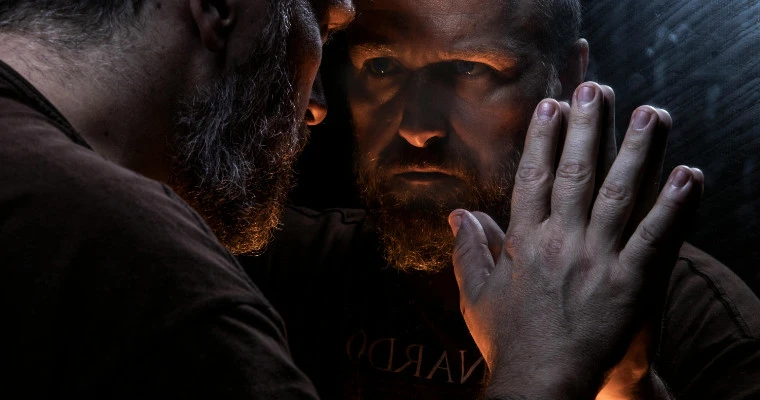
How to Change Your Life by Realigning Your Identity
The majority of people are not living the life they want. People are normally living a life crafted by an older, outdated version of themselves.
Have you ever asked yourself “Who am I really?” or felt that inner emotional struggle without being able to name why, then read on? This is not a quick-fix or a motivational pep talk. It is an honest and pragmatic look at the deeper work of understanding yourself and choosing to change — from the inside out.
What Story Do You Tell About Yourself?
Before we talk about change, we need to talk about identity. Your self-concept is the internal narrative you carry about who you are. It is the sum of your beliefs, labels, memories, and assumptions — the answers you have accumulated, often unconsciously, to the question “Who am I?”
Psychologists describe self-concept as the cognitive and emotional framework through which you filter every experience, relationship, and decision in your life. It is not just what you think about yourself — it is the lens through which you interpret everything that happens to you.
When someone gives you a compliment, your self-concept determines whether you receive it or deflect it. When an opportunity arises, your sense of who you are and what you deserve will determine whether you step forward or retreat.
This is why surface-level change so rarely lasts. You can update your habits, your environment, your relationships — but if the underlying story about who you are remains unchanged, you will unconsciously rebuild the same life you were trying to leave.
“You do not rise to the level of your goals. You fall to the level of your identity.”
— James Clear, Atomic Habits

How Your Identity Was Formed — and Why It May No Longer Fit
Your sense of identity was not chosen consciously. It was constructed — layer by layer — from the messages you received as a child, the experiences that shaped you, the environments you grew up in, and the stories others told about you that you eventually made your own.
A teacher who called you slow. A parent whose love felt conditional. A failure that convinced you that you were not the kind of person who succeeds. A culture that defined your worth in narrow, prescriptive terms.
These experiences leave impressions. And over time, those impressions harden into beliefs. Those beliefs become the foundation of your self-concept — and that self-concept quietly governs your life long after the original experiences have passed.
The problem is not that you have a self-concept. The problem is that most people never examine theirs. They live their whole life operating from an identity that was constructed in childhood, fine-tuned by tough circumstances, and never consciously updated.
They carry labels — “I am not a confident person,” “I am terrible with money,” “I am not the kind of person who finishes things” — as if they were facts rather than stories. And because the mind is excellent at confirming what it already believes, the evidence for these stories keeps accumulating.
This is the mechanism behind feeling stuck. It is not laziness. It is not weakness. It is the natural result of an outdated identity operating on autopilot.
Why Am I Stuck?
The Real Root of Emotional Struggle
Emotional struggle — that persistent, grinding sense of being unable to move forward — is one of the most common experiences people bring to coaching. And in my experience, it is rarely a motivation problem. It is almost always an identity problem.
When your internal sense of who you are is misaligned with the life you are trying to build, the result is friction. That friction shows up as anxiety, procrastination, self-sabotage, burnout, and a nagging sense that something is fundamentally wrong — even when everything on the outside looks fine.
Psychologists call this identity-behaviour incongruence: the gap between who you are trying to be and who your subconscious believes you actually are.
Here’s the key understanding: your mind is not working against you when you self-sabotage. It is protecting an identity it believes is true. If you believe deep down that you are not someone who deserves success, your mind will find ways to ensure you do not have to face the discomfort of contradicting that belief.
It will introduce doubt at the last moment.
It will manufacture reasons to procrastinate.
It will create conflict in relationships that start to go well.
It does not do this intentionally, but rather out of a desperate need for consistency.
Now you know why willpower alone never solves the problem. You can push through with sheer force for a while, but you are swimming against the current of your own identity. The moment you stop pushing, the current pulls you back.
The Cost of Living Without Direction
One of the quietest forms of suffering is directionlessness. It does not announce itself with a crisis. It settles in slowly — a growing sense of flatness, of going through the motions, of achieving things that no longer feel meaningful.
Viktor Frankl, writing from his experience in Nazi concentration camps, described this as an existential vacuum: the absence of a felt sense of meaning and direction in life.
This vacuum is more widespread today than at any previous point in modern history. We live in an era of unprecedented choice, and yet — or perhaps because of it — a crisis of direction is one of the most common presenting concerns in both coaching and therapy. People have more options than ever and less clarity than ever about which of those options actually reflects who they are and what they genuinely value.
The connection to self-concept is direct. A meaningful sense of direction does not come from planning alone. It comes from clarity about who you are — your values, your strengths, your non-negotiables, the experiences that genuinely light you up versus the ones you have been told you should want.
When your identity is clear, your direction emerges naturally because you are no longer choosing between a hundred equally abstract options. You are asking a simpler and more powerful question: “What would the person I am becoming actually do?”
This shift — from destination-focused to identity-led living — is one of the most significant reorientations a person can make. It moves you from the exhausting question of “what should my life look like?” to the grounding question of “who am I, and how do I want to show up?”
From that foundation, direction becomes less something you find and more something you embody.
“Clarity is not the absence of complexity. It is what happens when you stop letting noise masquerade as truth — and start listening to yourself.”

Why Change Can Be So Hard
If you have ever committed to changing your life with sincerity — and then watched yourself slowly revert to old patterns — you are not weak or broken. You are experiencing the entirely predictable result of how the human brain works.
The brain is a prediction machine. Its primary job is not to help you grow — it is to keep you safe and to conserve energy. It does this by building neural pathways that automate familiar behaviours, emotions, and thought patterns.
Over time, these pathways become deeply grooved. Neuroscientists sometimes describe this as “neurons that fire together wire together.” Your existing identity patterns are, in a very real sense, written into your neurology.
When you attempt to change behaviour without addressing the underlying identity, your brain experiences it as a threat. Not a physical threat — but a coherence threat. The brain prefers internal consistency.
When your actions start to contradict your existing self-concept, the brain generates subtle but powerful resistance: doubt, discomfort, rationalisation, fatigue. This is not a character flaw. It is neurology.
The good news is that the brain is also neuroplastic — meaning it can and does rewire itself in response to new, repeated experiences. Identity change is neurologically possible. But it requires consistent, deliberate action over time, anchored in a clear intention about the new identity you are building.
This is precisely where structured coaching becomes a powerful accelerant.
How Do I Change?
Identity Realignment in Practise
Identity realignment is the intentional process of examining, questioning, and consciously rewriting the internal story that defines who you believe you are. It is not about pretending to be someone you are not. It is not about toxic positivity or affirmations that are disconnected from action.
Identity change is about doing the honest, often uncomfortable work of understanding how your current self-concept was formed, whether it still serves you, and how to construct a new one deliberately and intentionally.
I work with clients not as someone who holds the answers, but as a guide who believes — absolutely — that you are the expert of your own life. My role is to help you cut through the noise, identify what is true versus what is conditioned, and move toward what I call internal coherence: the state where your values, thoughts, emotions, and actions are aligned rather than working against each other.
When that alignment is present, life change stops feeling like a battle and starts feeling like a return to your authentic self.
The C.O.R.E. Clarity & Performance Framework
Mark Csabai’s signature methodology
This framework is not a linear checklist — it is a living process. Clients move through these four dimensions repeatedly, each cycle deepening their understanding and strengthening the alignment between who they are and how they are choosing to live.
Step 1 — Audit your current identity honestly
Begin by naming the beliefs you currently hold about yourself. Who do you believe you are? What labels do you carry — about your worth, your capability, your potential, your right to take up space? Write them down without editing or softening.
This is not comfortable work, but it is essential. You cannot realign an identity you refuse to look at.
Step 2 — Trace each belief to its origin
For each limiting belief, ask: where did this come from? Who told me this — and did they have the authority or the wisdom to define me? Is this a fact, or is it a story I adopted because I did not have the tools to question it at the time? This inquiry is at the heart of meaningful personal transformation — and it is often here that the most significant shifts occur because many people discover that the beliefs governing their lives were never really theirs to begin with.
Step 3 — Choose your identity on purpose
This is where agency begins. Decide who you want to be — not what you want to achieve, but who you want to become. Write a clear, present-tense statement of your chosen new identity. Some examples may be: “I am someone who shows up consistently, even when it is difficult.” “I am someone who communicates with honesty and care.” “I am someone who trusts their own judgement.” These are not affirmations — they are compass points, providing direction for every choice that follows.
Step 4 — Take identity-consistent action
Every action is a vote for the person you are becoming. Small, consistent behaviours — chosen deliberately to align with your new self-concept — reinforce the new identity over time.
This is how lasting change actually works: not through an explosion of motivation, but through the quiet accumulation of evidence that you are, in fact, the person you have decided to be.
Step 5 — Work with support, not in isolation
The deepest identity transformation rarely happens alone. Not because you are incapable — but because the very beliefs that need examining are the ones that are hardest to see from the inside. A skilled coach, therapist, or trusted community does not do the work for you.
They create the conditions in which the confusion starts to lift, the patterns become visible, and the path forward becomes clear. Knowing where you are going is far easier when you have someone helping you remove the noise that has been obscuring it.

Internal Coherence
The goal of identity realignment is not perfection. It is not a finished state you arrive at and then maintain with ease. It is a quality of relationship with yourself — one characterised by honesty, intentionality, and a growing trust in your own inner compass.
Here is what I mean by ‘internal coherence’
When you live in internal coherence, your values inform your decisions rather than sitting in a drawer, unexamined.
Your emotions become information rather than forces that control you.
Your behaviour reflects who you actually are rather than who you were conditioned to perform.
The gap between your public self and your private self begins to close. Your direction in life becomes less something you search for and more something you embody, naturally, in the way you spend your time and the choices you make each day.
This is what a meaningful, fulfilled life actually feels like — not the absence of difficulty, but the presence of alignment. Not a destination, but a way of being that you have chosen and that you keep choosing, one decision at a time.
“There is nothing wrong with you. You are just operating from a story that was written before you were old enough to question it. The work now is simply to write a better one.”
— Mark Csabai
A Final Word
You Are the Expert of Your Own Life
If there is one thing I want you to take from this article, it is this: you already hold the answers. They may be buried under years of conditioning, confusion, and emotional noise.
They may have been dismissed by others, or by an earlier version of yourself that did not yet feel safe enough to trust them. But they are there.
My work is not to tell you who you are or where you should go. It is to create the conditions — the clarity, the structure, the honest reflection — in which you can discover that for yourself, and then have the courage to act on it. That is how real change happens.
Not by following someone else’s blueprint, but by finally, deliberately, choosing your own.
If you are ready to do that kind of work, I would be honoured to walk alongside you.